Black Friday 2025: How Smart Price Tracking Can Make or Break Your Sales
Learn how to use price tracking to plan smarter discounts, boost profit, and dominate Black Friday 2025 without losing margins.
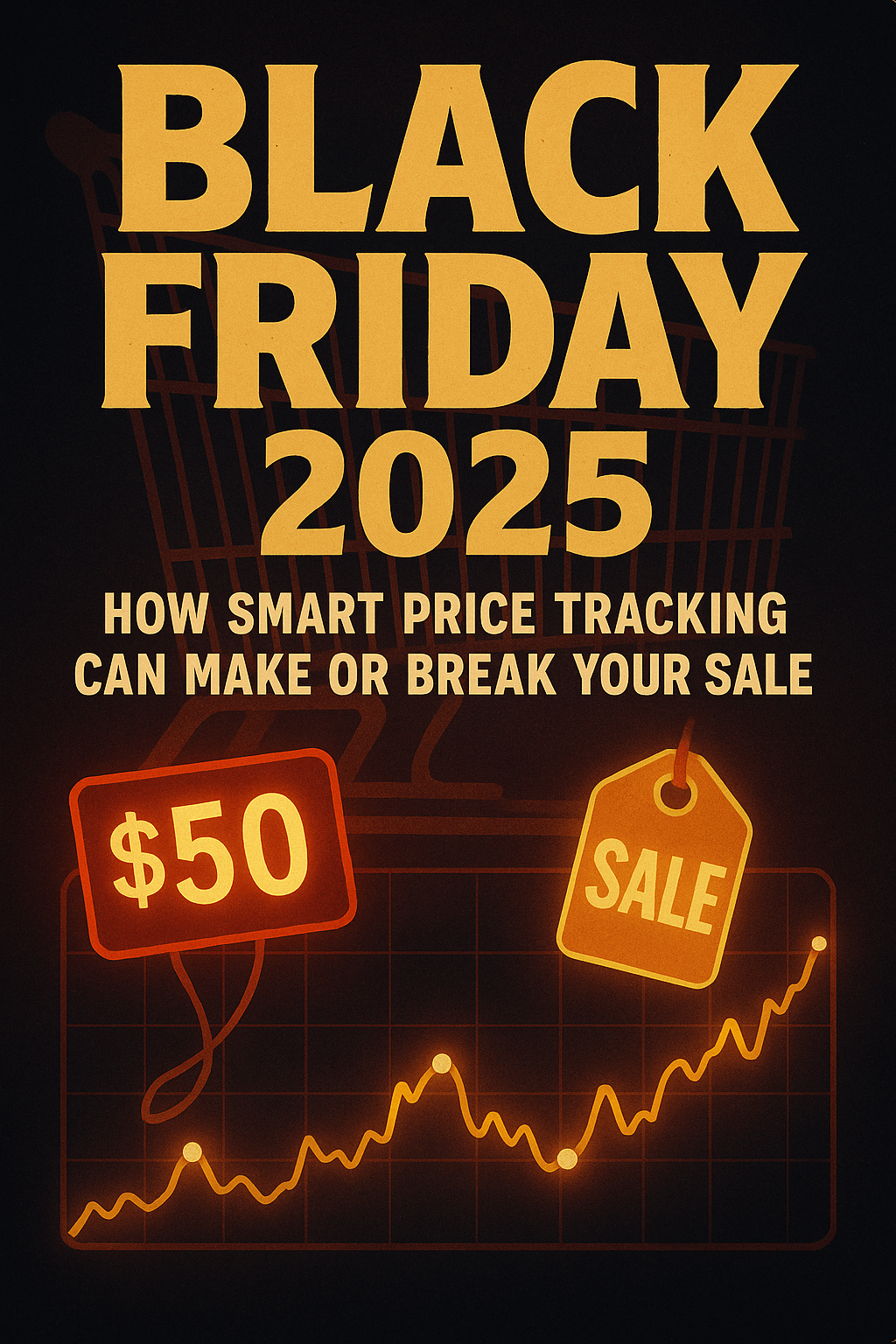
Black Friday is the Super Bowl of e-commerce.
Every year, retailers slash prices, consumers flood online stores, and ad costs skyrocket.
But while everyone's fighting to go lower, the smartest sellers are doing something different — they're using price tracking data to decide when, where, and how much to discount.
If you're running an online store this year, this guide will show you exactly how to leverage price intelligence to dominate Black Friday 2025 — without cutting your profits in half.
The Black Friday Problem: Competing Without Going Broke
Black Friday has changed.
Ten years ago, a big "40% OFF" banner guaranteed traffic. Today, your competitors are doing dynamic pricing, AI-driven discounts, and real-time ad bidding.
And here's the truth:
🧨 Most stores lose money during Black Friday because they discount blindly.
They don't know:
- Which competitors are running deeper discounts
- When prices start dropping
- Which products customers are actually watching
That's where price tracking tools like PriceSense come in — turning chaos into strategy.
Why Price Tracking Is the Secret Weapon for Black Friday
Black Friday is no longer about "who has the biggest sale."
It's about who reacts fastest and plans smartest.
Here's how price tracking changes the game:
🧠 1. Know When Competitors Start Their Discounts
Price tracking lets you see exactly when others begin to lower prices — often days before official Black Friday.
You can match the timing or strategically wait to undercut when shoppers are most active.
Pro tip:
Track your top 10 competitors now — by mid-November, you'll have clear data on who moves early and who holds back.
💰 2. Find the Optimal Discount Range
Not all discounts convert equally.
By analyzing past years' data and live price changes, you can discover that 15% off may perform better than 30% off if it keeps you competitive while protecting margin.
For example:
- Competitors drop wireless earbuds from $89 → $69.
- You price at $72 but promote free shipping and faster delivery.
- The result? Higher conversion without the steep discount.
🔍 3. Catch Flash Deals and Match Fast
During Cyber Week, Amazon and Walmart can change prices hourly.
Manual monitoring won't cut it.
With PriceSense, you'll get instant alerts when competitors lower prices — so you can decide whether to match or differentiate.
Example:
You sell smartwatches for $149.
Amazon drops to $139 for 4 hours.
PriceSense pings you → you run a flash ad with $10 off → you retain customers who would've bounced.
⏰ 4. Time Your Promotions Perfectly
Black Friday pricing isn't just about what you discount — it's when.
Based on years of e-commerce trend data:
- Early bird deals (Nov 15–22): Capture deal hunters early.
- Main event (Nov 29): Big-ticket electronics dominate.
- Cyber Monday (Dec 2): Accessories, add-ons, and bundles convert best.
By combining price tracking with your promotion schedule, you can adjust dynamically — not guess.
🛍️ 5. Use Competitor Prices in Ad Targeting
Google Ads and Meta (Facebook/Instagram) perform better when your offer aligns with market pricing.
If your prices are too high, your click-through rates plummet.
Tracking competitor prices allows you to:
- Adjust your ad creative ("Same product, better price")
- Optimize bidding for products that are truly competitive
- Avoid wasting spend on overpriced items
Example: A Shopify Furniture Store During Black Friday
Let's say you sell modern home furniture.
You use PriceSense to track competitors on Amazon, Wayfair, and Overstock.
Here's what happens:
- Week before Black Friday → Wayfair starts 25% off sofas.
- You wait and see Overstock go 30% off, but only on select colors.
- You match with 20% off + free delivery, staying profitable while appealing to value-conscious shoppers.
Result: you rank higher in Google Shopping and convert more efficiently — without killing your margins.
🖼️ Alt: PriceSense dashboard showing sofa price comparison between Wayfair, Overstock, and Shopify store.
Advanced Tip: Use Historical Price Data
PriceSense Pro users can see months of price history, revealing patterns like:
- Which brands discount most aggressively
- When last year's deals started
- How long sales lasted before prices rebounded
This insight helps you avoid over-discounting and plan profitable inventory buys.
Common Black Friday Pricing Mistakes (and How to Avoid Them)
❌ Discounting too early
Customers may wait for deeper deals later. Start tracking early and move strategically.
❌ Ignoring smaller competitors
Niche stores often undercut big brands quietly — PriceSense finds them first.
❌ Relying on gut feeling
Pricing by instinct leads to losses. Use real data to decide discount tiers.
❌ Not tracking post-sale recovery
After Cyber Monday, many retailers raise prices again — use this window to win late shoppers.
FAQs About Price Tracking for Black Friday
Q: How early should I start tracking?
Start at least 3–4 weeks before Black Friday to capture pre-sale trends.
Q: How often does PriceSense check prices?
Up to several times per day (Pro plan), ensuring you never miss sudden price shifts.
Q: Can I track multiple competitors for one product?
Yes. Add up to 10 sellers per product to see who moves first.
Q: Does PriceSense help after Black Friday?
Absolutely — Cyber Monday and post-sale pricing trends are just as valuable.
Final Thoughts: Data Beats Discounts
This Black Friday, don't just drop prices and hope for sales.
Use data-driven pricing intelligence to:
- Predict when discounts will peak
- React instantly to competitor moves
- Protect your margins while still dominating your category
🧠 Smart pricing = better profits.
🔥 Start tracking your competitors today with PriceSense — and make this your most profitable Black Friday ever.
Start tracking competitor prices today
Join thousands of users optimizing their pricing strategy